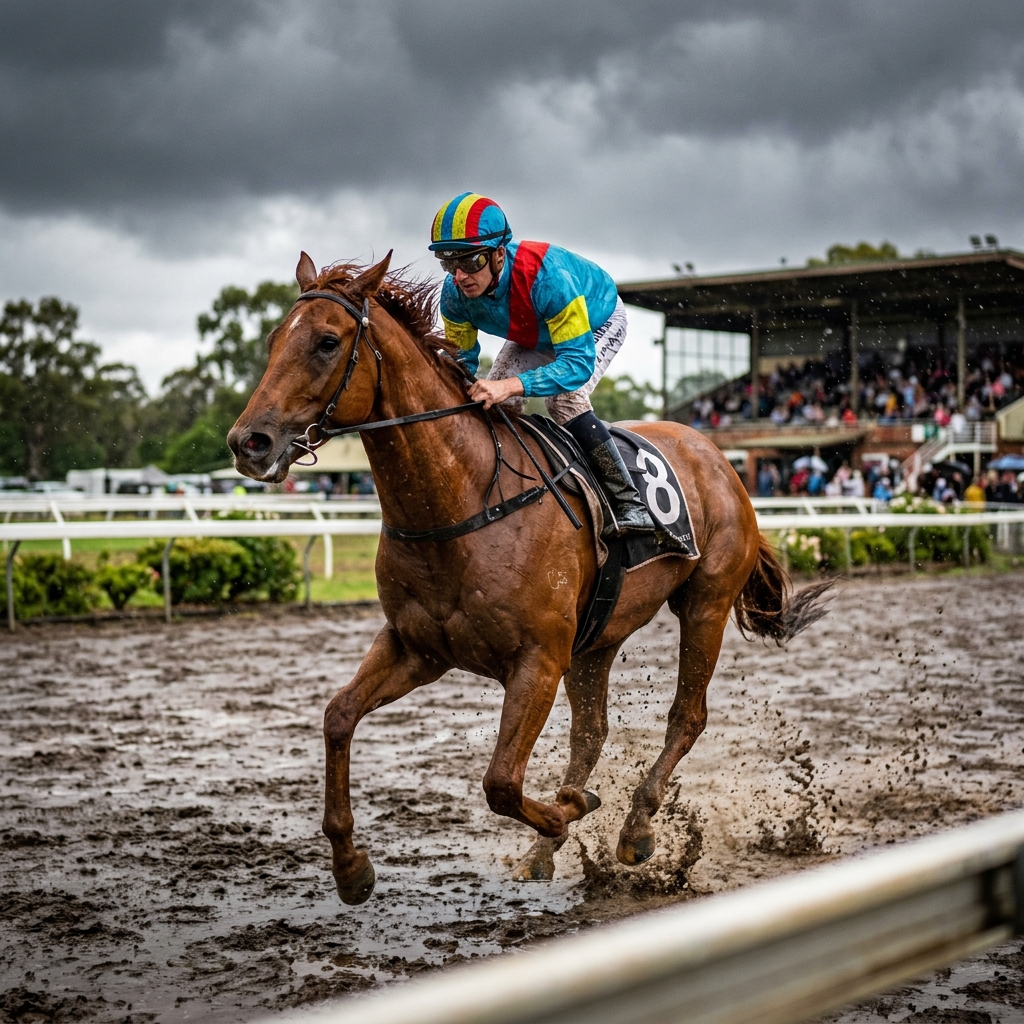
Wet Tracks Change Everything For Punters
Rain is coming to the Hunter this Saturday and that changes the whole game. Here is how to find the value others miss when the track goes soft.
Right, so the rain is rolling into Newcastle this Saturday and across a lot of the spring carnival tracks up and down the eastern seaboard the going is softening fast. Now for a lot of casual punters, that is the moment they throw their hands up, scratch their selections off the notepad and head to the bar early. But here is the thing, wet weather racing is not chaos. It is actually one of the best opportunities a switched-on punter gets all season, because when conditions shift, the market panics and the value emerges in places that reward a bit of homework. The key is knowing what to look for before the bookies adjust and before the crowd catches on. And trust me, the crowd always catches on too late.
Let us start with the basics of reading market movements when the track rating drops. When a track shifts from a Good 4 to a Soft 6 or a Heavy 8 overnight, the first thing that happens is the favourite's price shortens or blows out depending on its wet track record. Watch those movements carefully. A horse that drifts from $3.50 to $5.00 in the hour before the jump is telling you something. The market is nervous about it in the wet. Conversely, a runner that firms from $9 to $6 without any obvious news, a gear change or a significant jockey booking, is almost certainly being backed by someone who knows it handles cut-up ground. That is the signal you want.
Barrier draws matter a lot more when the track is heavy. In soft conditions the inside can become a bog, particularly in the straight, and horses drawn wide are sometimes gifted better ground closer to the rail at other times, depending on how the track has been watered and where the traffic has been. At Newcastle's No. 1 track the ground near the rail can hold water after a decent fall, so a horse drawn in the first three barriers on a Heavy 9 is worth a closer look at, specifically to see whether its jockey tends to slide out for better footing in the early stages. That brings us to jockey bookings, which are one of the most underrated indicators in wet weather racing. When a top-shelf wet track jockey who does not ride for a particular stable suddenly takes a booking on a relatively unheralded runner, that is a flag worth chasing. Jockeys talk to trainers. They know which horses go in the wet and they choose their rides accordingly. If a rider with a strong heavy track strike rate picks up a $12 shot and you can see the horse has placed twice on a Heavy 8, start paying attention. Do your form on the last 12 months of that jockey's wet track statistics and you will quickly work out who loves a rain-affected track and who is just filling a ride.
Late scratchings are another piece of the puzzle that casual punters often ignore, and they really should not. When conditions deteriorate significantly between Friday afternoon and Saturday morning, trainers pull runners. That is just the reality of wet weather carnivals. But here is what matters: every scratching changes the field dynamics. It opens up barrier advantages for horses moving across, it increases the prize money share for remaining runners, and sometimes it removes a genuine pace-setter which completely alters how the race is likely to unfold. Get into the habit of checking the scratching list on Saturday morning before you finalise anything. A race that looked like a hard-run speed duel at 7am can become a sit-and-sprint contest by 10am if the front-runner gets pulled out because of the Heavy 10 rating. The horse that benefits most from that shift is often the one still sitting at double figures in the market because the average punter has not done the maths yet. That is where your opportunity lives. Favourite backers panic when their $2.80 horse suddenly looks vulnerable in the wet. Prices blow out, fields thin, and the proven mud-larks, the horses with two or three heavy track wins already on the board, start to represent genuinely outstanding value. Back the data, not the drift.
What To Do Next
Here is the practical checklist for this Saturday. Check the Bureau of Meteorology forecast for the Hunter region first thing on Saturday morning and note the official track rating as soon as Racing NSW updates it. Pull up the form guide and filter each field by wet track performance, specifically Heavy 8 and above. Note any jockey changes or bookings made in the 24 hours before the first race, because that is when the informed money tends to move. Cross-reference the barrier draw against the track rating and think about where the best ground is likely to sit. Check the scratchings list at least twice before you bet, once at breakfast and once an hour before the first race. And when you see a genuine mud-lark sitting at odds that do not reflect its wet track record, that is your moment. Also from 9am the "pros' are allowed to bet so make particular attention on whats getting moved in the market.The punters who do this work consistently are the ones who come out ahead when it rains. The ones who back the name or the colour of the silks are the ones buying the drinks. Get your form right, trust the data, and enjoy the racing this Saturday across the Hunter.