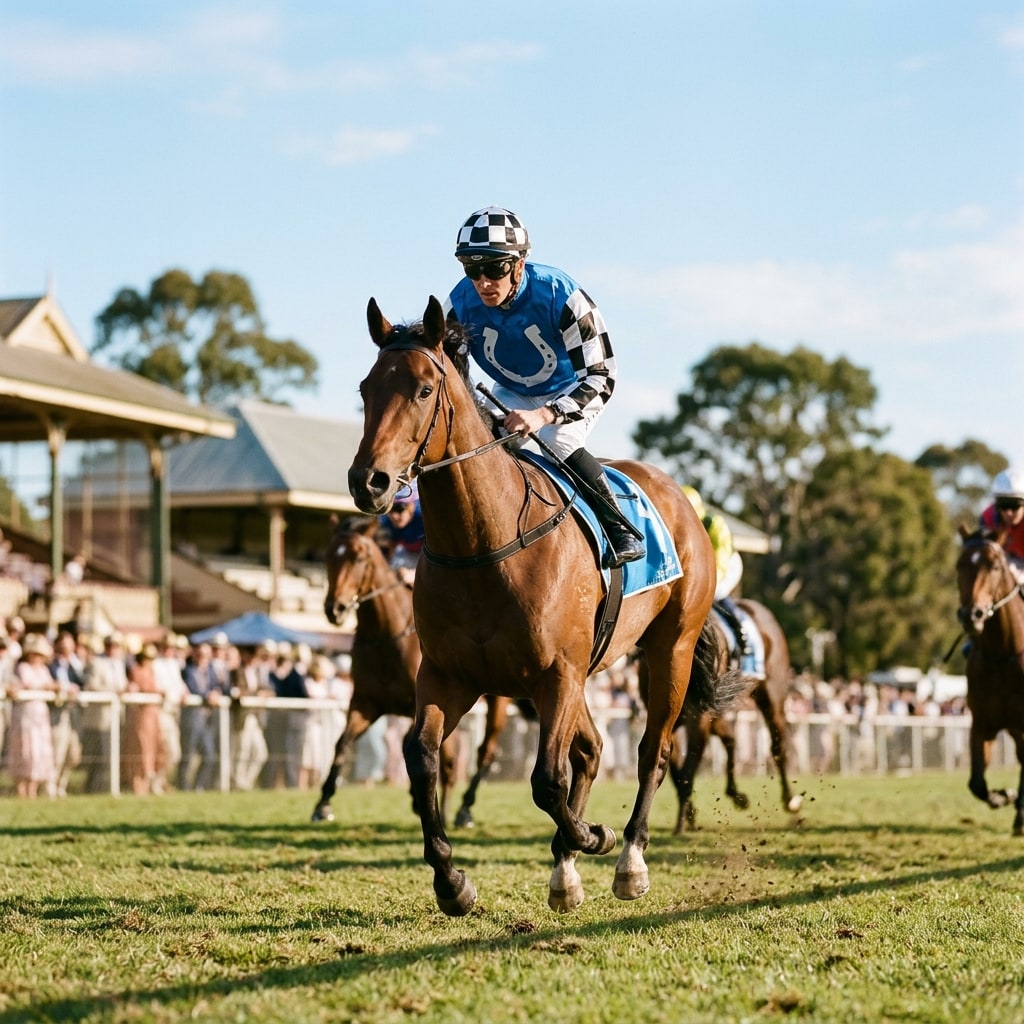
The Race That Stops A Nation
Every first Tuesday of November, Australia does something remarkable. It stops. Completely. And it's been doing it for over 160 years.
There are not many sporting events on the planet that can genuinely claim to shut down a country. The Melbourne Cup can. Offices empty out, building sites go quiet, schools huddle around televisions, and from Broome to Brisbane to right here in Newcastle, people who couldn't tell you the difference between a fetlock and a fence post suddenly have a very strong opinion about who's going to win the big race. That's the power of this thing. That's what 160-odd years of history does to a nation.
But it didn't start with marquees and millinery and multi-million dollar prizemoney. It started with two horses, a long walk, and a track that was barely more than a cleared paddock on the edge of Melbourne. The year was 1861, the venue was Flemington Racecourse, and the Melbourne Cup was about to be run for the very first time. The field was small, the crowd was modest, and nobody could have imagined what this race would eventually become.
The horse that won it was Archer, a big chestnut gelding who became the stuff of genuine Australian legend. Trained by Etienne de Mestre and ridden by John Dillon, Archer won that first Cup in 1861 and then came back and won it again in 1862, making him the race's first back-to-back champion. What made Archer's story even more extraordinary was the journey to get there. The horse reportedly walked roughly 800 kilometres from Nowra in New South Wales to Melbourne to contest the race. Eight hundred kilometres on foot, just to show up and win. That's not a racehorse. That's a legend wearing horseshoes.
From those raw, dusty beginnings, the Melbourne Cup grew steadily into something that transcended sport. Through the latter half of the 1800s, Flemington became the place to be seen in Melbourne. The Spring Racing Carnival, which now spans several weeks across September- October and November, developed around the Cup as the centrepiece. Railways brought crowds in from across Victoria and beyond. Prize money grew. Stakes were raised. And the standard of horses entering the race lifted year after year as breeders and trainers began to realise what winning the Melbourne Cup actually meant for a thoroughbred's reputation and value. By the turn of the century, the race had already taken on a character that was entirely its own.
The early decades of the twentieth century cemented the Cup's place in Australian culture. Phar Lap's victory in 1930 is perhaps the single most romanticised moment in Australian racing history. A horse that had been shot at on the eve of the race, a horse that the public had fallen completely and utterly in love with, went out and won the Cup with the kind of authority that silenced even the doubters. Phar Lap didn't just win races. He gave people something to believe in during some of the hardest economic years this country had ever seen. His story, and the mystery that surrounded his death in America the following year, became part of the national folklore in a way that few sporting stories ever do.
By the time the second half of the twentieth century arrived, the Melbourne Cup had become something the whole country owned. Sweepstakes ran in every workplace. Fashions on the Field became as talked about as the race itself. Television brought the action into lounge rooms from Darwin to Hobart. And then came the international dimension, with European raiders beginning to eye the race seriously from the 1990s onwards, bringing a global prestige that pushed the Cup onto racing's world stage. Horses trained in Ireland, England, Germany and France began making the long journey south to contest what was increasingly being recognised as one of the great staying races anywhere on earth.